

A group of volunteer computer wizards with the Open Records Project discovered in 2020 that the computer at Central Count had been hacked in Dallas County. In this interview with their spokesman, Russell Fish, he describes what they found, and how our government — the Texas Secretary of State and Attorney General’s offices — lacked the capacity to deal with the issue, relying on contractors for computer security, and how journalists failed to cover the evidence. In the next election, the government refused to hand over the list of registered voters, like they had in every election. The Open Records Project computers were constantly under attack as a result. Watch the interview here:
The solution? Watch to the end. If the Republicans win, there will be hearings on elections from the Oversight Committee in the House.
This is a must watch episode:
Some context for this story.
This past summer, President Trump gave a major address to the nation on election security.
The President raised the alarm about serious weaknesses in the American election system, and presented major pieces of evidence.
Newly declassified intelligence had showed that China and Chinese-linked actors had bought, stolen, or hacked voter-registration information involving as many as 220 million Americans, and had created a data-exploitation unit for the project.
That a rival country would try to interfere in our elections is not a shocking idea. That was the premise after all of the “Russiagate” story that consumed nearly three years of national attention, and turned out to be a hoax. This is something we do to other countries, apparently.
Trump referenced previously classified intelligence assessments, like a Chinese effort to manufacture illegal ballots for Biden or CIA reporting about Venezuela, saying the Maduro government had developed methods to digitally alter vote totals in its own elections in ways designed to evade detection even during an audit.
At the same time some parts of the intelligence community was producing these assessments, other elements were covering it up. From evidence giving in Trump’s speech and subsequent revelations, it certainly seems like elements of our national intelligence community were in on it. Trump said dozens of CIA and NSA reports concerning Chinese election targeting were kept out of presidential briefings. A November 20, 2020 internal intelligence email states: “We have deliberately massaged our one pending PDB to avoid any direct links to the election.” An FBI Counterintelligence Division official, wrote: “I’m basically running a shadow government across the FBI at this point.”
Nothing in Trump’s speech was too shocking to anyone who has read this book by Ralph Pezzullo:
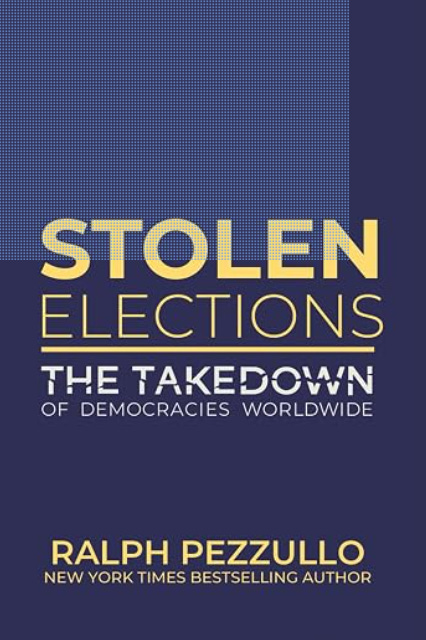
The book is based on the work of private investigators Gary Berntsen and Martin Rodil, funded by Patrick Byrne of overstock.com, who were investigating the Cartel del Sol in Venezuela and uncovered a system run from there which manipulates elections around the world.
The Cartel del Sol is an enormous Venezuelan-based criminal organization that is a combination of the Venezuelan army and a huge drug cartel, described as “Costco for drugs.” Pezzullo estimates that the cartel rakes in hundreds of billions of dollars annually from drug sales. That is a lot of money to bribe politicians and officials with.
The cartel is run by Diosdado Cabello, who was a close associate of Hugo Chavez and is the boss of the Venezuelan internal security services. While investigating it, Berntsen and Rodil repeatedly got information connecting Venezuelan officials with technology to alter elections. They spent two years traveling internationally, finding and recruiting engineers who had worked for Smartmatic and Dominion, companies whose real owner is Diosdado Cabello.
The story begins with Chavez.
Hugo Chavez was President of Venezuela from 1999 to 2013, when he died of cancer. Chavez, his associates, and his successor Nicolas Maduro looted oil-rich Venezuela and ran into the ground with hyperinflation and corruption resulting in shortages of basic necessities, an economic contraction of over 75%, and 8 million Venezuelans leaving the country.
Chavez was so unpopular that three years into his first term, the opposition got 20% of the entire registered voters to sign a petition for a recall election. Chavez was going to lose big, and after he told this to his patron Fidel Castro, Castro suggested that Chavez gain control of the voting machines used in the election. Chavez then tasked three Venezuelan-American technology specialists to develop software for manipulating election results. They did just that during Venezuela’s 2004 recall referendum, allowing Chavez to survive the recall. Chavez ultimately exported the election technology abroad, and manipulated elections around the world, including in the US.
How did Venezuela do that?
Through (a) massive funding, consisting of hundreds of billions of dollars in oil sales, hundreds of billions from drug trafficking, plus billions contributed by China, and through the assistance of (b) Frank Holder, a CIA asset and double agent working for Cuba, who helped the Cartel de Sol launder billions of dollars through a consulting company he purchased and corrupted, the Berkeley Research Group, which is responsible for security, financial, and intelligence due diligence work for top law firms, banks, and corporations in the US, and (c) Lord Mark Malloch-Brown, the President of George Soros’ Open Society Foundation and Chairman of Smartmatic from 2011-2020. (The book claims that cartel money also goes into the Open Society Foundation and then is used to fund the Democratic Party and allied groups — a claim which seems more plausible given the unfolding ActBlue scandal).
But how did it come about the tainted tech be used in US elections?
Through secrecy and deception. Chavez’s original company, Smartmatic, acquired Sequoia, an older election technology company, in 2005, and installed their source code on the Sequoia machines. Congress demanded that they disclose their company ownership, and after they refused, Smartmatic sold Sequoia, but not before installing their source code on those machines. This was discovered by the California Secretary of State in 2007, which produced a 300-page report that caused California to eliminate the use of Sequoia. That was under California Gov. Arnold Schwarzenegger, however. When Jerry Brown took over, his administration quietly changed the rules so that companies no longer had to submit their source code for review. Dominion, the company that bought Sequoia and used the same source code, got over $280 million to install election infrastructure in LA County in time for the 2020 election. California also allowed Dominion to reinstall its software five days after the election, to erase any proof of tampering.
But how are the machines used to cheat?
There are many methods. The steal is well organized and planned a year in advance, but does not require more than a handful of people on the ground or even that many counties to steal a national election.
Before a batch of votes is permanently saved, an outside operator replaces the authentic batch image with another image containing altered votes. The substituted image then becomes the record examined during an electronic audit. This is especially effective where auditors are restricted from examining the original paper ballots.
The system is designed to beat an audit. Different techniques would be used in different counties so that investigators could not easily identify a statewide pattern. The vote switching is not dramatic; it could be shaving small percentages from Republican margins in heavily Republican counties, which does not attract attention. The voting system is also built in such a way that administrators can delete the logs. And the companies claim that their source code is proprietary, and so cannot be examined.
Was the 2020 election stolen?
Yes, according to the authors.
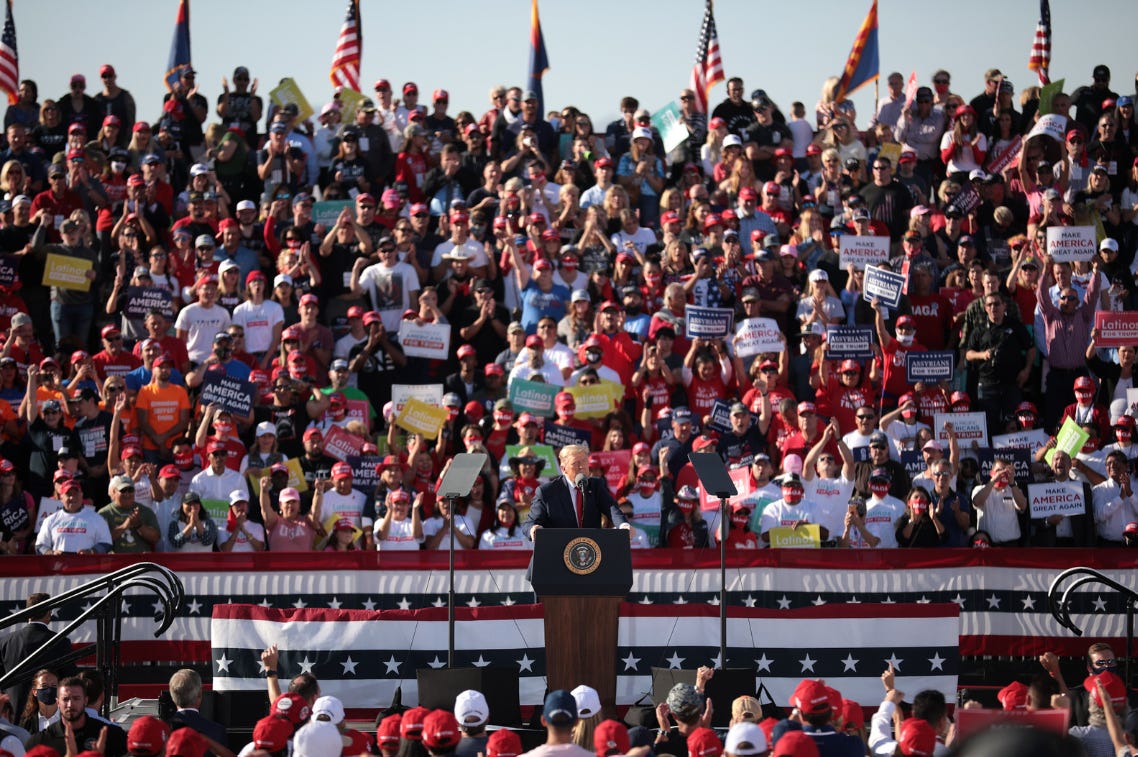
Which is not impossible to believe:
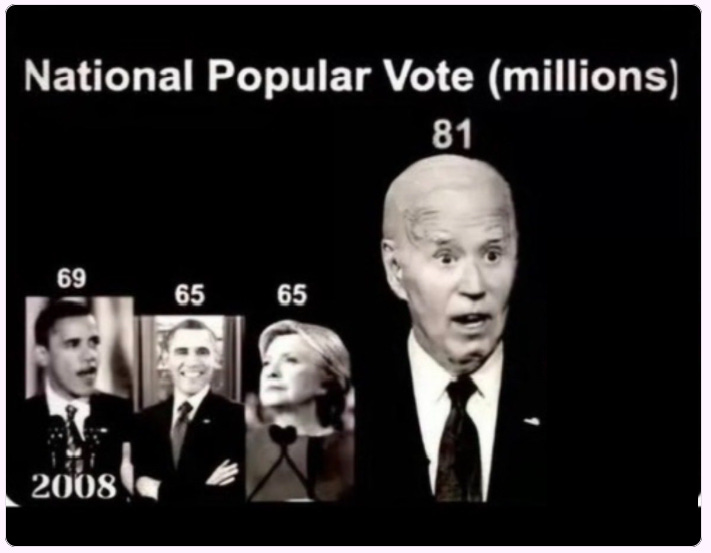
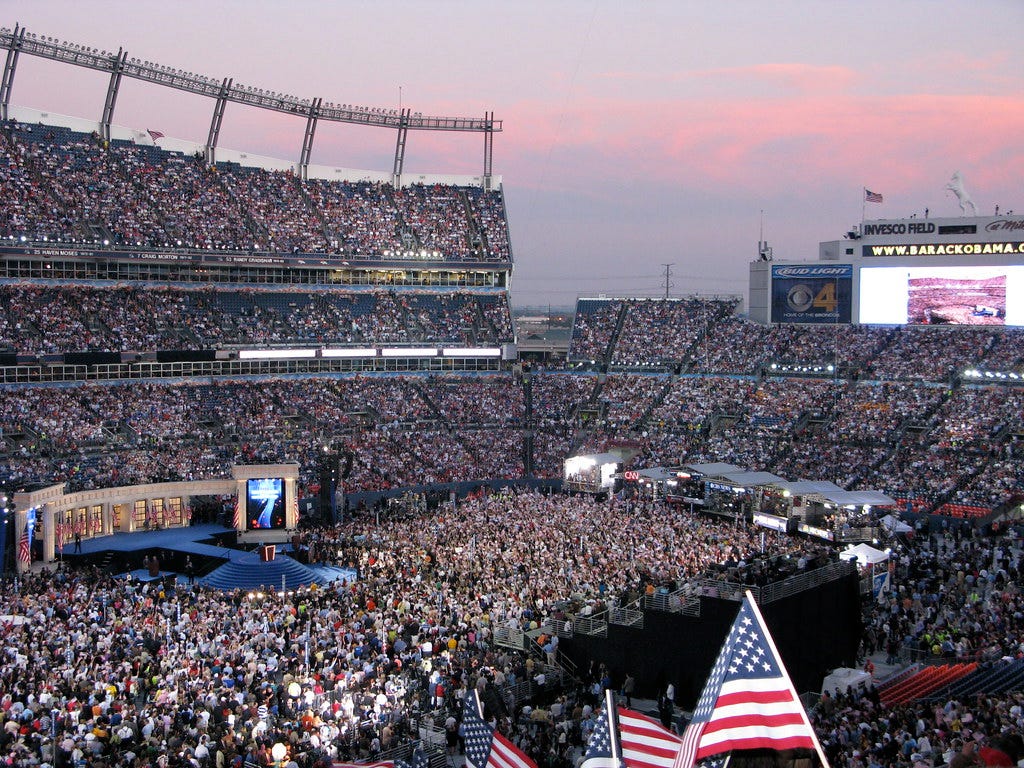
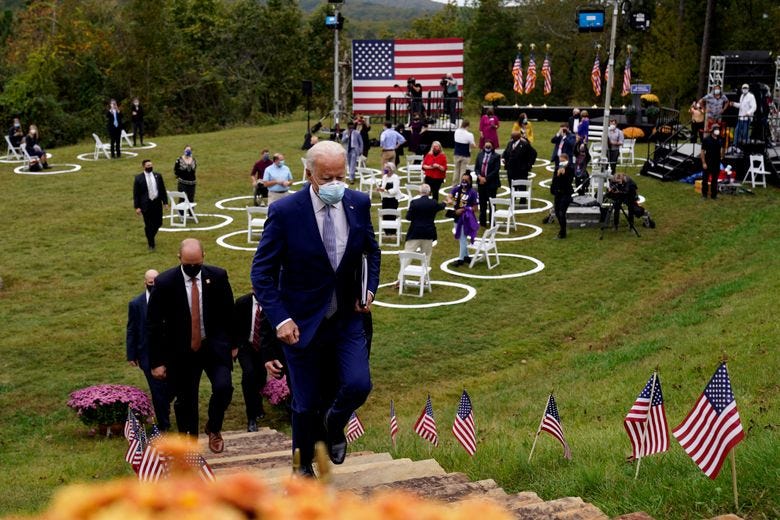
What about the 2024 election?
From the book:
In the final weeks of the 2024 Presidential election, engineers recruited by the whistleblowers collected strong evidence that the criminal cartel led by Venezuela was about to steal the election for Democratic Party candidate Kamala Harris.
With the help of other cyber security experts, the engineers were able to stop the illegal altering of election results by shutting down the servers that the criminal cartel was using in Serbia and other countries, thus preserving the integrity of the 2024 US election.
There is a direct Venezuelan connection to elections in Dallas County in the person of our last elections administrator, Heider Garcia, a Venezuelan who graduated from Universidad Simón Bolívar and, according to the account of whistleblowers, was involved in creating the software for Smartmatic that has been used to steal elections around the world.
Previously, Garcia was Tarrant County elections administrator starting in February 2018. Donald Trump won Tarrant County in 2016, but Joe Biden managed somehow to narrowly win Tarrant in 2020.
Currently Garcia is vice president at Hart InterCivic. Texas uses Hart InterCivic voting equipment extensively.
When Heider Garcia became the elections administrator in Tarrant County, one of the first things he did was implement countywide voting, which has been a disaster for election security, making it unable to be audited, as we covered earlier this year.
Here is an account of Heider Garcia’s administration in Tarrant County by someone with first-hand experience:
There are a number of striking claims in this video, especially about the manipulation of the voter rolls and ballots being run through the voting machines multiple times that are very suspicious.
Heider Garcia has been described as a “snakey, slimey person” by those who have interacted him when he ran Dallas County elections. One example: during the 2024 election, there were 78 early voting locations, and the county elections department was unable to reconcile any of them (!). In the end, Garcia actually directed the Ballot Board to add the names of voters who checked in to the paper voter rosters. One Ballot Board member, the heroic Susan Cumby, documented this and filed a complaint about this request to falsify government records. Garcia called her out, she resigned, and the board did as Garcia directed.
Nothing happened as a result of her complaint.
And it is this lack of recourse that is the keystone to the whole system of election fraud, according to the researcher Andrew Paquette in this must-read article:

The point of the article is this: when there is evidence of fraud, what can you do about it? The answer is, nothing. As we have mentioned before, complaints to the Secretary of State’s office will not change election results, only refer potential criminal violations to the AG or DA’s office. Regarding any effect on the election itself, a remedy would involve spending $20,000 to $60,000 for lawyers to bring a case before a Dallas County district court judge. And judges refuse to touch this issue, as the Open Records Project can testify.
What can we do?
There are a number of things we can push for on a local level to better election security.
Have voters sign the paper voter roster with a date and time, and have the election clerk sign the bottom of the roster. Provide access to the voter rosters in all recounts (these things are easy to do, and would provide excellent deterrence against fraud)
Provide access in recounts to the critical piece of documentation to verify chain of custody and the total number of ballots cast — the Ballot and Seal Certificates — in all recounts (cf. this post).
The last one is a very important one.
Why don’t the results just get posted at each polling place immediately upon closing? New Hampshire does this. It is indeed the typical American model. For most of American history, elections were conducted through a highly decentralized, precinct-based system in which results were counted locally and publicly before being aggregated upward.
This is a highly transparent way of doing things. The centralization of elections by contrast is not transparent. You vote on a machine, it prints a ballot with a bar code you cannot read to verify accuracy, the bar code gets scanned by the tabulator and the results put in electronic form which nobody can see, and then are aggregated in a way that is never fully audited. (The state-mandated “partial manual count” after each election proves this point, as it is kind of a joke.)
The centralization of elections is not a given. It would be easy to move back to the traditional American model.
But with countywide voting, it is impossible to have a decentralized system. Anyone can vote anywhere, which ballots for races all over the county are mixed in with the local races. With this highly fractured situation, loading results onto USB drives and taking them to a central accumulator makes sense. But with this centralization compromises election security. With precinct voting, precincts could post their totals for anyone to see, and the precinct results totaled together to get the final result, all out in the open, without a long chain of custody and the black box of central count telling us the totals.
Countywide voting is not a state mandate. It would be possible to go back to precinct voting.
There is one last thing we can do: make sure the chain of custody for the USB drives is tracked.
An interesting tidbit we received from an election judge in Dallas County:
During Judges’ training, I noticed that everything digital has a cross-checking physical check -- logs, seal numbers, etc. The one thing that the Judge does not have a physical record of -- by the explicit direction of my trainers -- is the serial number of the flash drive from the tabulator. This lack strikes me as a very flawed since the judge will hand over a flash drive with his pouch, but someone thereafter could potentially substitute a different flash drive.
We reviewed the training material for judges, and it seems to justify this account:
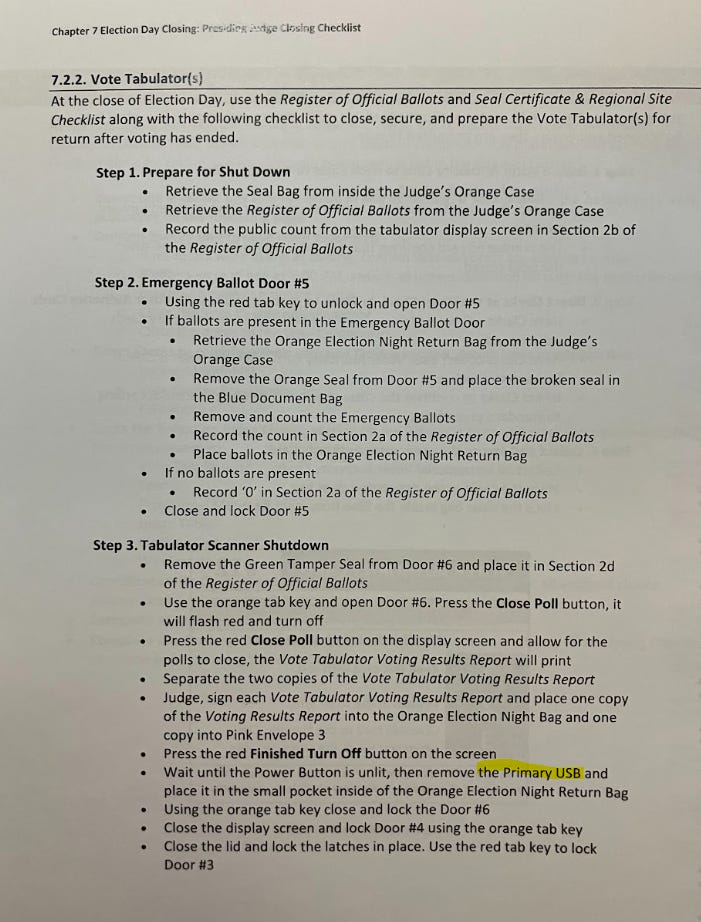

If accurate, this is not an election security best practice (cf. US Election assistance Commission Best Practices, page 16). It also does not seem to align with Texas Election Code either, which requires tracking of the USB drives:
(b) The general custodian of election records shall develop a procedure for tracking the custody of each electronic information storage medium from its storage location, through election coding and the election process, to its final post-election disposition and return to storage. The chain of custody must require two or more individuals to perform a check and verification check whenever a transfer of custody occurs. (Texas Election Code §129.051)
Hope is not lost though and change is always possible. Heider Garcia is gone and there are heroic activists who keep pushing for reforms like precinct voting, which is really a return to a classic American tradition.
250 years after the American independence, the fight for self-rule continues.
Contact: TheIrvingHerald@gmail.com (corrections/comments/news tips welcome)
© 2026 Irving Herald LLC. All rights reserved.